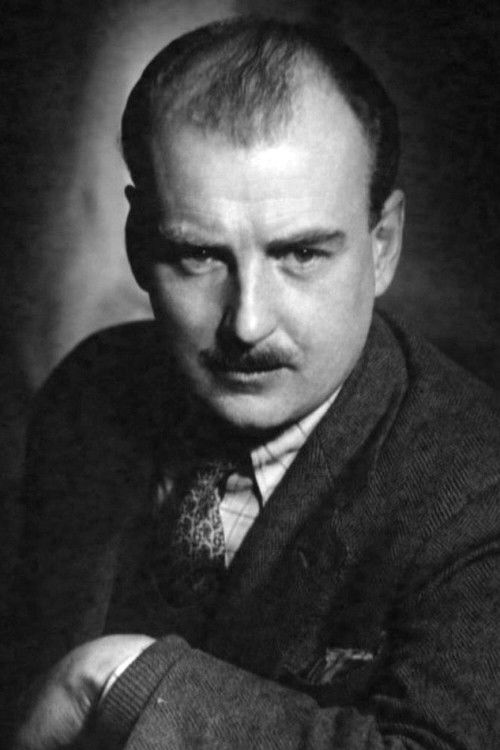
Paul Rotha
Known for Directing
Details
Birthday: June 03, 1907
Deathday: March 07, 1984
Place of birth: London, England
Biography
Paul Rotha (3 June 1907 – 7 March 1984) was an English documentary film-maker, film historian and critic.
He was born Paul Thompson in London, and educated at Highgate School and at the Slade School of Fine Art.
Rotha was a close collaborator of John Grierson, and Wolfgang Suschitzky was one of his cinematographers. He directed and produced dozens of documentaries including Contact (1933), Air Outpost (1937) The Face of Britain (1935), World of Plenty (1943), Land of Promise (1947), A City Speaks (1947) and many others. The World Is Rich (1947) and Cradle of Genius (1961), both of which were nominated for an Academy Award, and feature films including the BAFTA-nominated No Resting Place. Rotha was Head of BBC TV's Documentaries Department between May 1953 and May 1955.
Rotha shared with Otto Neurath an interest in the techniques of visual communication, and the two men worked together on several films, where Neurath's ISOTYPE pictorial statistics were animated as an important component of the films' arguments. He was initially a major opponent of sound in movies, although he later developed the technique of multi-voice commentary, in which the argument of the film is conveyed via discussion between several distinct voices, a distinctive form of documentary exposition. Films using this technique include New Worlds for Old (1938), World of Plenty (1943), The World is Rich (1947) and Land of Promise (1946).
Rotha wrote, produced and directed the 1958 crime drama Cat & Mouse, based on a novel by John Creasey and starring Lee Patterson and Ann Sears.
Director
1962
1960
1958
1953
1951
1947
1947
1946
1946
1945
1943
1940
1936
1935
1935
1933
1931
Writer
1958
1951
1947
1943
1936